
St Decuman Venerable Martyr of Dunster
Updated: 3 days ago
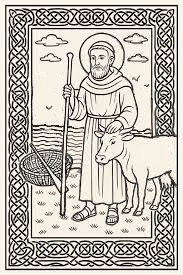
St. Decuman or also called Degyman, Decumanus, Decumannus, Decymyan, Dekeman, Decombes, Dagan and Tenen, was born in the sixth or seventh century to a noble family in what is now Pembrokeshire, south-western Wales, and his Life was published as late as the fifteenth century in Wells Cathedral. His alleged birthplace is the Welsh settlement of Rhoscrowther (original name: Llandegeman, meaning "Decuman's church"), and the local parish church is still dedicated to him today. After deciding to quit secular life, the young Decuman left South Wales and moved to north Somerset.
His family gave him a thorough education, including practical understanding of medicine, and placed him on a modest rented farm. His properties extended to Pwllcrochan and included a church.
Decuman had the disposition of a hesychast (hermit) since his youth. While his companions went hunting, he chose to attend the chapel and pray. He wanted not worldly intellect but chose instead the life of prayer and charity, and he grew increasingly desirous of leaving his home nation to serve the Lord in greater calm.
"Decuman set out for the coast with only a few goods and his milch cow. With no ship, he wove reeds together to form a raft on which he and the animal might safely traverse."
They sailed along Wales's south-western extremity before entering the Severn estuary, where the current brought them to the coast around Dunster and Exmoor.
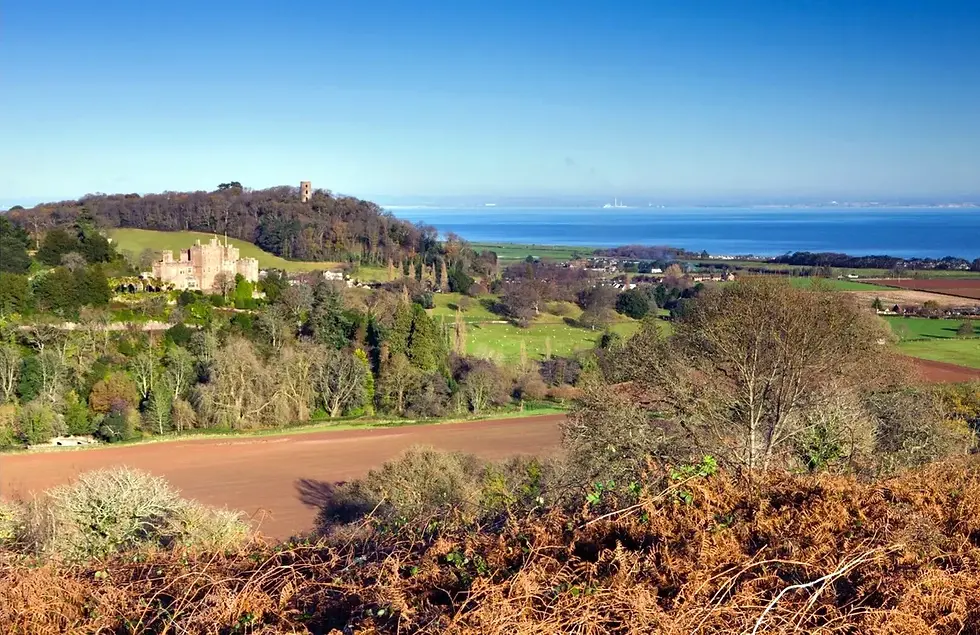
The ascetic established his home on the land that is now the location of the small village of Dunster, near the north-eastern edge of the high moorland of Exmoor (which is now a National Park and is primarily used as a grazing area for ponies, sheep, and red deer).
Decuman eventually moved farther along the estuary and resided at Watchet, which was more remote. The district was then wilderness, ideal for his ascetic objective.
The ancient tradition praises the profound nature of his solitude, stating that he was visited by angels rather than mankind.
Yet holiness cannot be completely disguised. The people around him eventually began to seek him out, seeking a cure for their ailments as well as spiritual guidance.

Our Holy Father St Decuman became a minister and began healing the locals from a variety of ailments. The saint eventually migrated to what is now the small harbour town of Watchet on the shore of the Bristol Channel, where he lived a severe ascetic lifestyle.
Decuman prayed to God and sung psalms all day and night, lived on herbs and roots, and drank only water, with the exception of milk on feasts and non-fast days. After many years of persistent prayer, the anchorite was awarded the martyrdom crown. According to popular belief, he was murdered by a vicious pagan who killed him as the saint was standing in prayer. According to mediaeval records, the year of this tragedy was 706; however, it could have occurred much earlier, in the sixth century.
"According to legend, St. Decuman immediately took his severed head, washed it in a spring, and miraculously reunited it to his neck! The locals who took pity on him assisted the ascetic in building the church, and there he died quietly. Interestingly, the identical late mediaeval tradition (with minor modifications) appears in the Lives of several other beheaded Celtic saints."
St Decuman's virtuous life and martyrdom left such an impression on the people of Somerset that they began to regard him as a saint immediately following his death.
The church in Watchet still survives today, though it has been restored several times since St. Decuman's martyrdom. It is dedicated to St. Decuman, the holy preacher and martyr, and his wonderworking relics have been kept here for generations. The existing church dates back to the 15th century. It boasts a huge and broad chancel (which predates the rest of the building), which has been extended throughout time and houses the saint's relics.

The chancel floor features some exquisite thirteenth-century tiles made at neighbouring Cleeve Abbey; it is now the most complete and reasonably preserved mediaeval monastery complex in England. The martyr's shrine is no longer visible, and the sole remaining remembrance of the saint is a modest statue in a niche on the south side of the church's bell tower. Among the various interior artworks are the carved wooden rood screen, which spans the width of the church nave and bears remnants of mediaeval paint, and the thirteenth-century sculptures on the waggon roofs, which depict angels. The church lies on top of a hill overlooking Watchet, and the original church is thought to have stood on Daw Castle, an Iron Age hill fort on a nearby sea cliff that failed to survive coastal erosion.
"The miraculous St. Decuman's well is located below, on the hill's steep slope. According to one legend, it appeared where his severed head fell (or, alternately, it existed before to St. Decuman's entrance but became holy when touched by the saint's blood). Its water used to flow downhill into two basins before entering the ground."
A mediaeval text states that "the fountain of St. Decuman is sweet, healthful, and vital to the inhabitants for drinking purposes." Pilgrims visited this well until the sixteenth century Reformation, and by the grace of God, it was just restored. Pilgrims return to this holy and pure source, and healings continue to occur today. The main pool is covered by a well-house, while the second pool goes down the slope. The well is located in a beautiful and peaceful garden, making it an ideal place to pause and pray. St. Decuman is regarded as the patron saint of Watchet and the mediaeval parish of St. Decumans.
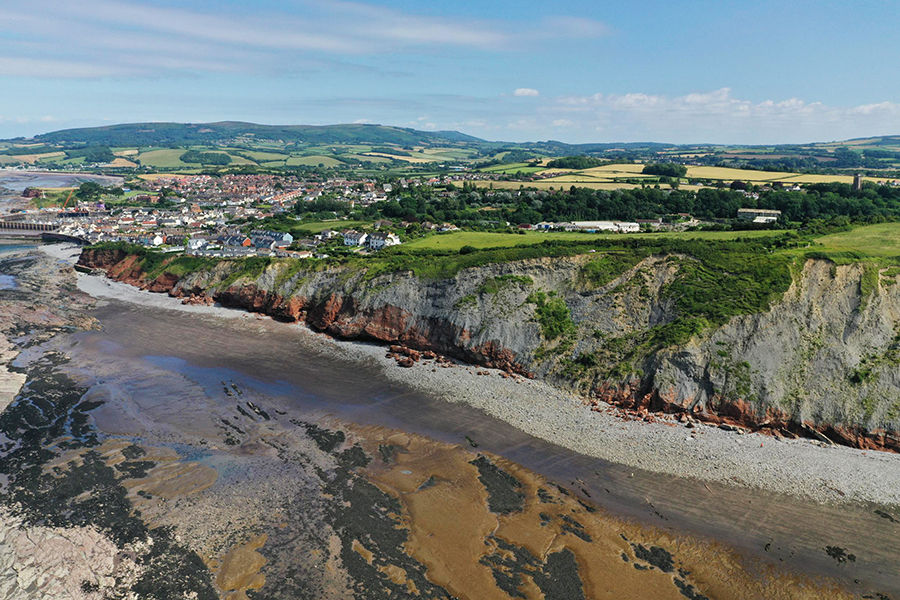
Interestingly, Watchet is associated with the great English poet and philosopher Samuel Taylor Coleridge (1772–1834), author of lyrical ballads and such poems as "Christabel." Coleridge, whose home was in a neighbouring village, was inspired by the view of the harbour from St. Decuman's Church and composed his famous poem, "The Rime of the Ancient Mariner."
Outside of Watchet, additional notable St. Decuman shrines included Muchelney and Wells in Somerset. This saint is still revered in Somerset, South Wales, and various locations in north Cornwall, including Helstone. The presence of churches dedicated to St. Decuman in Somerset, Cornwall, and Wales suggests that his disciples encouraged his reverence and were active in these areas, however it is not impossible that St. Decuman himself conducted missionary excursions across the West Country.
"Holy Monk-Martyr Decuman, pray to God for us!"
His Feast Day is: August 27 NC /September 9 OC
Sources: saintsoftheisles.substack.com , orthochristian.com


Comments